
It’s a common misconception that a cat’s fur provides complete protection against the cold. However, senior cats, typically those aged over eight years, are particularly susceptible to colder temperatures. As they age, these cats lose essential muscle mass and the insulating subcutaneous fat, making it challenging for them to maintain body heat. If your cat’s usual behavior has altered, it might be a subtle sign that they’re feeling the chill. Here’s how you can interpret your cat’s behavior and ensure they stay warm through the winter months.
Identifying Cold Signs in Cats
Cats often communicate their needs through behavior rather than vocalization. Here are several signs that your cat might be feeling cold:
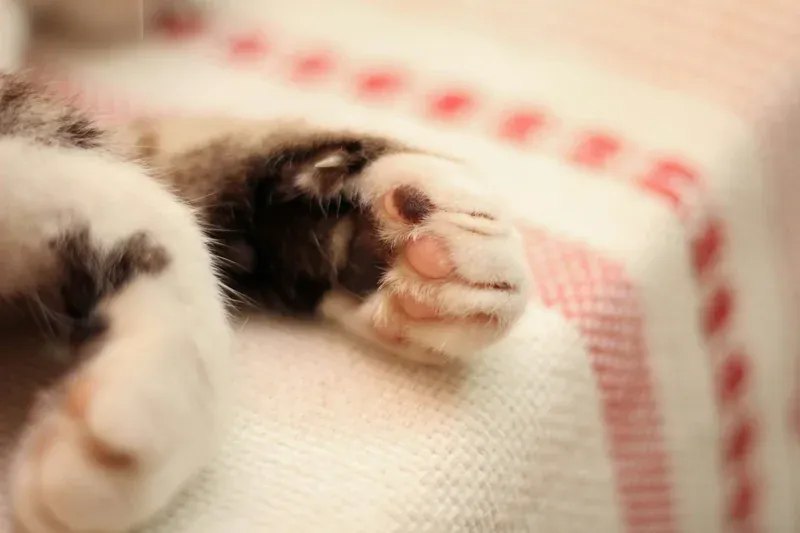
1. Chilly Paws
Cats’ paws are naturally exposed, lacking the fur that covers the rest of their bodies. If you notice your cat’s paws are colder than your skin, the ambient temperature may be too low for them.
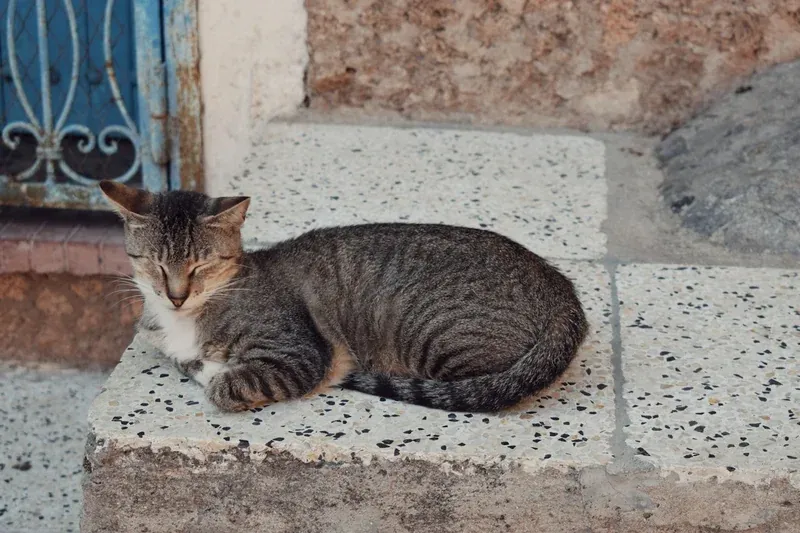
2. Compact Loafing
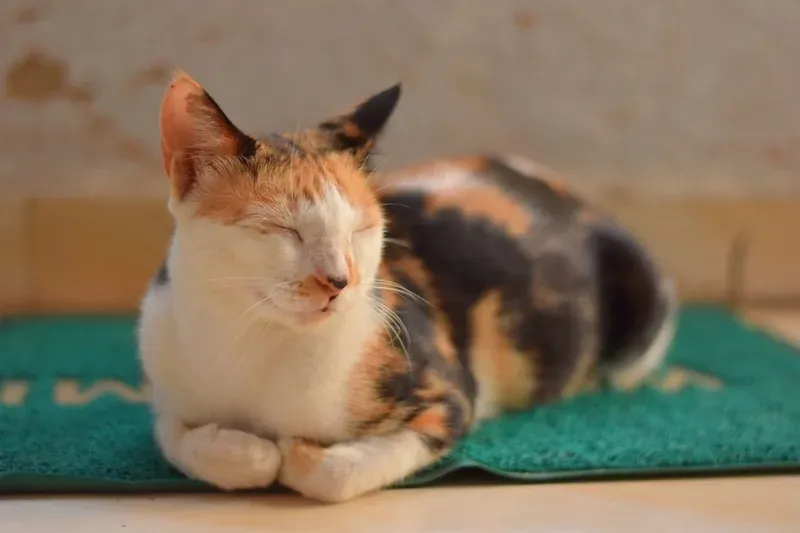
When your cat adopts the ’loaf’ position, tucking its paws and tail beneath its body, it is trying to conserve heat by reducing surface area exposure.
3. Increased Clinginess
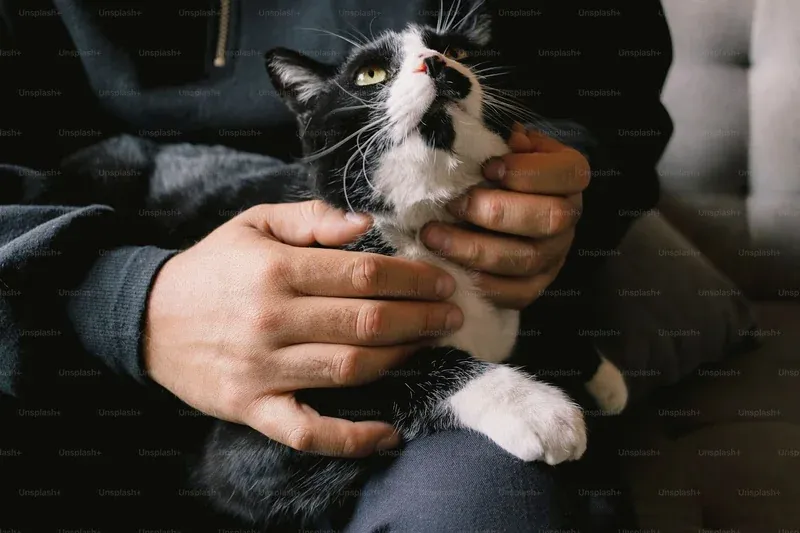
If your feline friend is suddenly glued to your side, they might be drawing warmth from your body. This behavior is more than just seeking affection; it’s a practical way to stay warm.
4. Seeking Heat Sources
Cats often find cozy spots near heaters or appliances that emit warmth. If you catch them in these spots frequently, it indicates they’re struggling with the cold.
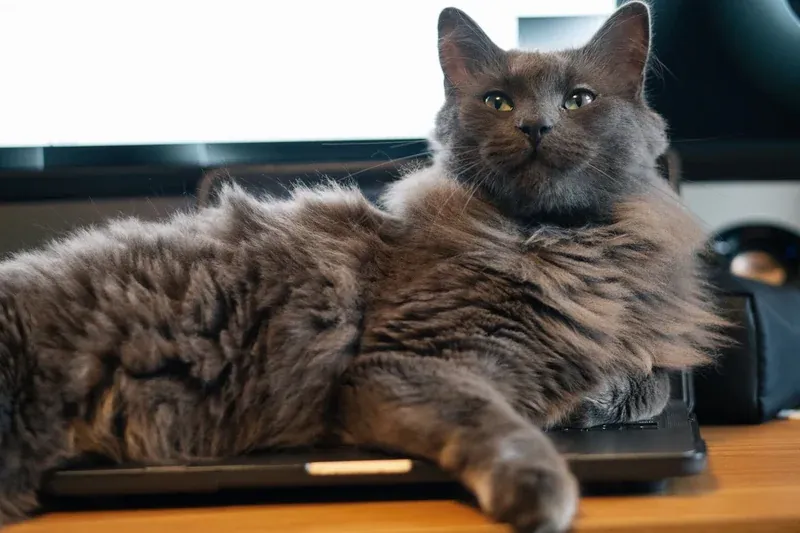
5. Tight Ball Sleeping
Curling into a tight ball, with their nose tucked in, is a sign that your cat is trying to preserve heat. This differs from a relaxed sleeping position.
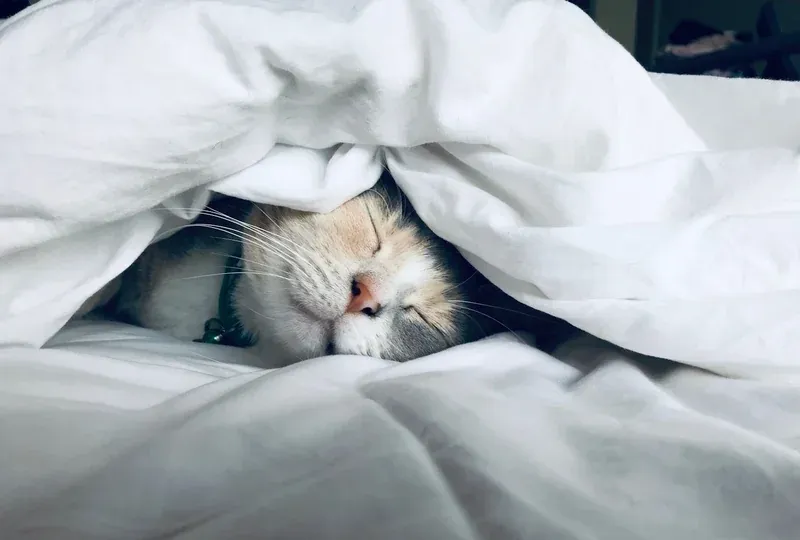
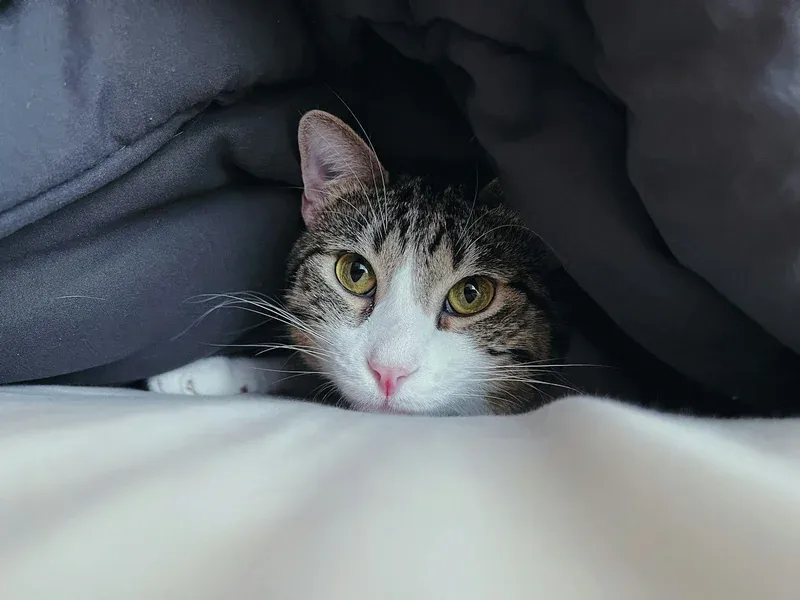
6. Burrowing Under Covers
If your cat buries itself under blankets or clothes, it’s a strong indicator that it’s cold and seeking an insulated environment.
Tips to Keep Your Cat Warm
Create a Cozy Bed
Invest in a bed designed to retain heat, like a ‘cave’ or ‘igloo’ type. These enclosed beds help trap warmth and protect against drafts.
Tip: Consider beds with orthopedic foam, which offers comfort and support, especially for cats with arthritis.
Reduce Bathing
Baths can lower your cat’s body temperature significantly. During the winter, minimize baths to every two to three months. Use pet-safe waterless shampoos or warm wipes to keep them clean without the chill.
Nutrition and Hydration
Ensure your cat’s diet includes high-quality proteins, such as boiled chicken, to fuel their metabolism and generate body heat. Encourage hydration by adding warm water to their wet food.
Quick Tips for Winter Cat Care
| Feature | Adjustment | Importance |
|---|---|---|
| Bedding | Use covered beds | Retains heat and prevents cold drafts |
| Grooming | Spot-clean only | Reduces risk of hypothermia |
| Nutrition | High-protein diet | Supports heat generation |
| Environment | Keep temperature between 68°F - 75°F | Ensures comfort |
FAQs
Are heated mats safe for cats? Yes, if they are specifically designed for pets. Use low-voltage, vet-approved heating pads to prevent burns.
Why does my cat’s fur appear spiky? This is piloerection, where fur stands up to trap heat. If indoors, it’s a sign your cat is cold.