
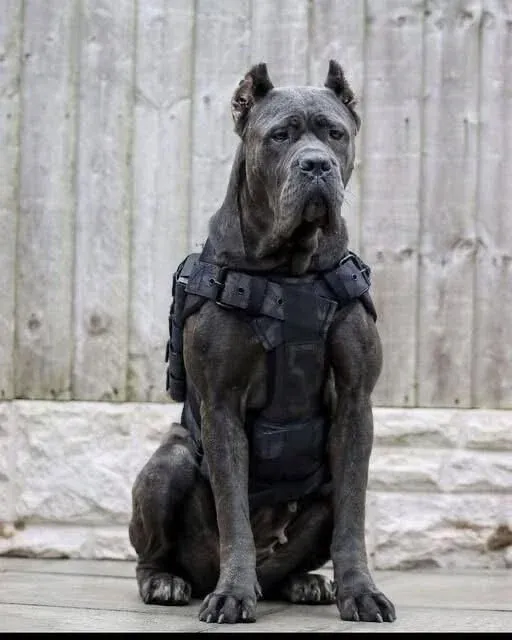
🎩 Breed Overview
Name: Cane Corso, pronounced Kah-neh Kor-so. Origin/Type: This formidable breed hails from Italy and belongs to the Mastiff family. The term ‘Cane Corso’ finds its roots in the Latin word Cohors, translating to “Protector” or “Bodyguard.”
💪 Distinctive Appearance
The Cane Corso stands apart in the mastiff family, not as a sluggish giant but as the athlete of its lineage. Its coat is sleek and dense, often seen in shades of black, blue-gray, or fawn with a striking black mask. The body is muscular yet streamlined, akin to a granite sculpture.
One of its most compelling traits is its noble head and discerning gaze. The Cane Corso observes with a calm, analytical demeanor, rarely barking without cause. This breed epitomizes the concept of a “Silent Sentinel,” exuding sophistication akin to a bodyguard in a tailored suit, ready to unleash its strength if necessary.
📜 Historical Journey
The lineage of the Cane Corso is steeped in the annals of history, tracing back to the war dogs of Ancient Rome, known as Canis Pugnax. These formidable canines accompanied Roman soldiers into battles, donning spiked collars and occasionally carrying incendiary devices to disrupt enemy forces. With the decline of the Roman Empire, these dogs found a new role in Southern Italy. They became indispensable farm protectors, safeguarding estates from threats and aiding in the hunt for wild game. By the 20th century, their numbers dwindled due to changes in agriculture. Yet, a dedicated group of enthusiasts in the 1970s revived this “Roman Warrior,” securing its place as a premier guardian breed once again.
🍖 Care and Training Essentials
🐾 Welcoming a Puppy: The Early Days
Bringing a Cane Corso puppy into your home is akin to enlisting a new member of your security team. Their rapid growth demands high-quality, large-breed puppy food to manage development and prevent joint complications. It’s crucial to avoid high-impact activities on hard surfaces until they mature (around 18 to 24 months).
🐾 Socialization: Building Confidence
- Exploration Phase (3-6 months): This stage is vital for a Cane Corso. Naturally wary of strangers, without proper exposure, this trait can escalate to fear-based aggression. Introduce them to varied environments and teach them that unknown individuals pose no threat.
- Adolescence (6-18 months): During this time, they will challenge boundaries. Intelligent and assertive, they require a consistent, calm leader. They respond to fairness and confidence rather than stern discipline. Failing to establish leadership may result in them assuming the role.
🐾 Sustaining the Athlete
- Nutrition: To mitigate the risk of bloat (GDV), provide smaller, more frequent meals and ensure rest post-feeding.
- Activity: Unlike their English counterparts, the Cane Corso thrives on activity. They need tasks to focus their energy. Be it through training, agility exercises, or long runs, keeping them engaged is key to their well-being.

🐾 Wisdom from the Cane Corso
In an era where noise often equates to presence, the Cane Corso embodies the principle of “Stoic Watchfulness.”
This breed teaches us that true protection is not about overt displays of force but about steadfast presence. They remain by your side, vigilant and silent, requiring little beyond your affection, yet ready to defend you with unwavering loyalty. The Cane Corso is the quintessential “Ride or Die” companion, devoted and fearless.